Iran Defends Itself: Stunning Warning After Clashes


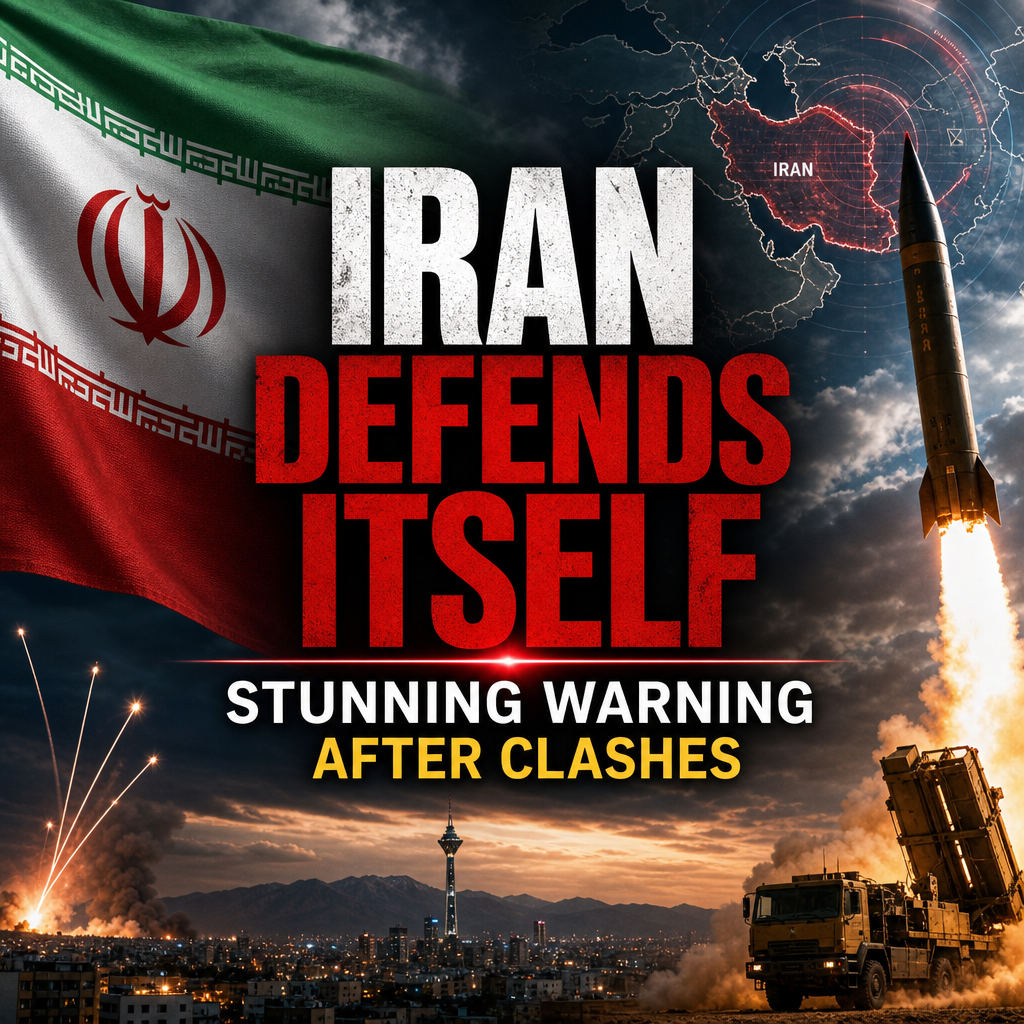
Iran defends itself has become more than a political slogan in the latest round of regional tension, with Tehran issuing a blunt warning after fresh clashes and framing its posture as a response to external pressure rather than an escalation of its own making. Across reporting from Al Jazeera, Sky News, and RT, one theme stands out clearly: the conflict is being read in radically different ways depending on where you sit, but the risk of miscalculation is rising either way.
What Tehran is trying to signal
Iran’s message, as reflected in the coverage, is straightforward: it says it will not hesitate to defend its territory, its interests, and its allies if attacked again. That language matters. It is not the same as openly declaring a wider war, but it is also not a vague diplomatic warning. It is meant to deter opponents by showing that retaliation is still on the table.



Al Jazeera’s framing emphasizes the defensive narrative coming from Tehran. In that telling, Iran is responding to a cycle of strikes, counterstrikes, and regional destabilization that it believes has been forced upon it. The language from Iranian officials is notably firm, but it also leaves room for ambiguity: defend against what, exactly, and how far would that defense go? That lack of precision can be strategic, because it preserves deterrence without locking Iran into a specific timeline or target list.
RT’s coverage tends to highlight the broader geopolitical context and the recurring pattern of pressure on Iran from Western-aligned powers. That perspective often portrays Tehran as reacting to provocation, sanctions, and military threats rather than initiating conflict for its own sake. Whether one agrees with that interpretation or not, it helps explain why Iranian officials keep stressing sovereignty and self-defense rather than talking in purely military terms.




Sky News, by contrast, generally places more weight on the regional security implications. From that angle, the warning is significant because it suggests Iran is preparing the public and foreign governments for the possibility of further escalation. The concern is not only what Iran says it will do, but how neighboring states and global powers might respond once they believe Tehran has crossed from rhetoric into action.
Why the response has been so mixed
The different reactions to Iran’s warning reveal a deeper problem: there is no shared understanding of what “self-defense” means in this crisis.
For Iran and its supporters, the phrase is tied to sovereignty and deterrence. For its critics, it can sound like a justification for proxy activity, retaliation through allied groups, or broader military confrontation. That gap is why the same statement can be read as either a warning meant to prevent war or a signal that war is inching closer.
A few points help explain the divide:
– Security lens: Regional states and Western governments often see Iran’s military posture as part of a wider network of influence and armed pressure.
– Political lens: Tehran presents itself as resisting encirclement and foreign coercion.
– Media lens: Coverage differs depending on whether outlets prioritize diplomatic consequences, battlefield developments, or the legal language of sovereignty.
This is where the reporting from the three outlets complements one another. Al Jazeera tends to foreground the immediate facts and the regional fallout. Sky News stresses the diplomatic and security risks to the wider Middle East. RT focuses more on the argument that Iran is being pushed into a defensive corner by outside powers. Put together, they show not just a clash between countries, but a clash between narratives.
The bigger risk: accidental escalation
The most sobering aspect of the current moment is that even if Iran is trying to deter further attacks, deterrence can fail. That is especially true in a region where multiple armed actors, surveillance systems, air defenses, and allied militias can turn a contained incident into a broader confrontation.
Iran’s warning may be meant to prevent exactly that outcome. But once both sides believe they must appear strong, the room for compromise shrinks. That is the central danger: each warning, each strike, and each public statement can make the next move harder to walk back.
There are also practical limits to how much any side can control the situation. If an attack is attributed to an ally or proxy group, the response may not be as direct or as predictable as a formal state-to-state exchange. If civilian casualties rise, pressure for retaliation intensifies. If major powers step in, the conflict becomes even harder to contain.
A fair reading of the moment
The most balanced conclusion is that Iran’s warning should be taken seriously, but not automatically interpreted as a declaration of full-scale escalation. It is a calculated message: Tehran wants to project strength, reinforce deterrence, and show that it believes it has legitimate grounds to respond.
At the same time, the competing reporting underscores that this is not a simple story of one side acting and another side reacting. There are longstanding grievances, overlapping wars, proxy relationships, and a deep trust deficit on all sides. That complexity is exactly why the situation remains so volatile.
For now, the strongest takeaway is not that war is inevitable, but that the margin for error is dangerously thin. Iran’s insistence on self-defense may be intended to prevent further strikes, yet in a region already saturated with tension, even a defensive warning can reverberate like a threat.